UK Betting Sector Tops Age Verification Benchmarks in Serve Legal Tests
Written by Felix Braun · Aug 18, 2026

UK Betting Sector Tops Age Verification Benchmarks in Serve Legal Tests
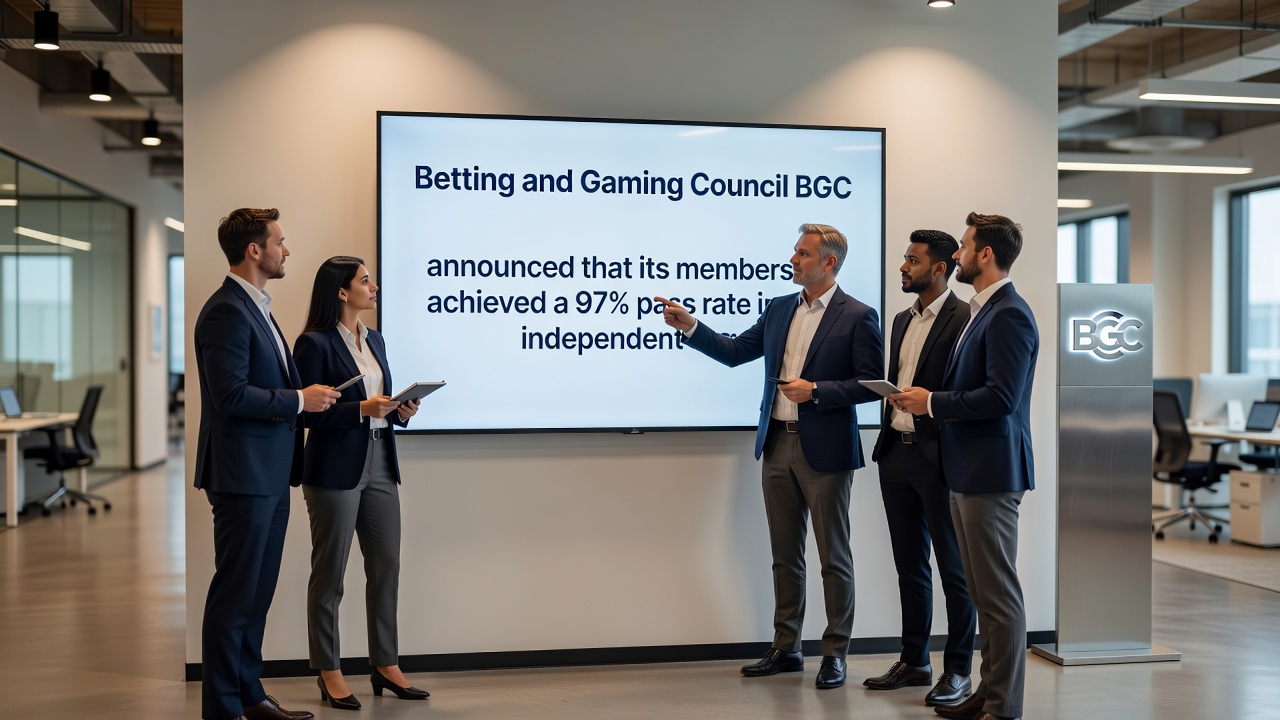
The Betting and Gaming Council announced that its members recorded a 97 percent pass rate in independent age-verification test purchasing carried out by Serve Legal across the period from May 2025 through April 2026, and this figure stood as the highest among all compared sectors while also marking a five-percentage-point rise from the previous year.
Observers note that the regulated UK betting and gaming industry outperformed supermarkets at 80 percent, convenience stores at 77 percent, specialist vape shops at 61 percent, and delivery services at 44 percent, according to the same benchmarking exercise, and the results underscore the sector's ongoing focus on robust age checks, staff training programs, and Challenge 25 policies designed to protect young people.
Testing Methodology and Timeline Details
Serve Legal conducted the mystery shopping evaluations over twelve consecutive months beginning in May 2025 and concluding in April 2026, during which time trained assessors attempted purchases at licensed betting and gaming premises to measure adherence to legal age restrictions, and the 97 percent success rate emerged from hundreds of individual test interactions distributed across multiple operators who belong to the Betting and Gaming Council.
Data from these evaluations reveal consistent application of Challenge 25 protocols, where staff request identification from anyone appearing under the age of 25, and the improvement of five percentage points year-over-year indicates measurable progress in training refreshers and operational procedures implemented by member companies since the prior testing cycle.
Comparative Performance Across Retail Categories
When placed alongside other age-restricted product categories, the betting and gaming results demonstrate a clear lead, with supermarkets achieving 80 percent compliance, convenience stores reaching 77 percent, specialist vape shops recording 61 percent, and delivery services trailing at 44 percent, and these figures come from the identical Serve Legal framework applied across each sector during the same twelve-month window.
Experts have observed that the gap between betting and gaming operators and the next highest category, which sits at 17 percentage points above supermarkets, reflects differences in staff training intensity, frequency of compliance audits, and integration of digital verification tools at the point of sale, while the overall pattern shows every sector maintaining some level of enforcement yet none matching the regulated gambling industry's rate.
Those who have reviewed the full dataset note that the betting and gaming sector's year-over-year gain of five points occurred alongside stable or slightly declining figures in certain other categories, and the announcement from the Betting and Gaming Council positions this outcome as evidence of sustained investment in responsible retailing practices that extend beyond minimum statutory requirements.
Policy Framework Supporting the Results
Member operators maintain mandatory staff training modules that cover identification verification techniques, refusal procedures, and escalation pathways for suspected proxy purchases, and these programs receive regular updates aligned with guidance from the Gambling Commission and local licensing authorities, while Challenge 25 remains the operational standard applied at all physical and certain remote points of sale.
The testing window ending in April 2026 captured performance under these established protocols, and the 97 percent pass rate indicates that the combination of in-person training, mystery shopper feedback loops, and internal compliance monitoring has produced measurable consistency across hundreds of locations operated by council members.
Context Within August 2026 Regulatory Landscape
By August 2026 the industry continues to operate under the same licensing conditions that require robust age verification systems, and the Serve Legal results released after the April 2026 testing cycle provide the most recent public benchmark against which future performance will be measured, with operators expected to sustain or exceed the 97 percent threshold in subsequent rounds.
Regulatory observers point out that the five-percentage-point improvement between the 2025 and 2026 cycles aligns with broader efforts to embed digital age estimation technology alongside traditional identification checks, and the comparative advantage over other retail sectors remains a focal point in ongoing discussions about best practice transfer across age-restricted industries.
Conclusion
The Betting and Gaming Council announcement confirms that its members delivered a 97 percent pass rate in independent age-verification testing conducted by Serve Legal from May 2025 to April 2026, surpassing all other sectors evaluated under the same methodology and improving five points from the prior year, while the data continue to highlight the sector's structured approach to staff training and Challenge 25 enforcement as the foundation for these outcomes.